Buying guides · 23 September 2026
iPhone Duo: the perfect size, seven years in the making
Apple waited while others shipped folding phones first. The iPhone Duo shows what the wait was for, from a shape borrowed from a sheet of A4 to a crease Apple asks you to judge.
By iVillage Africa
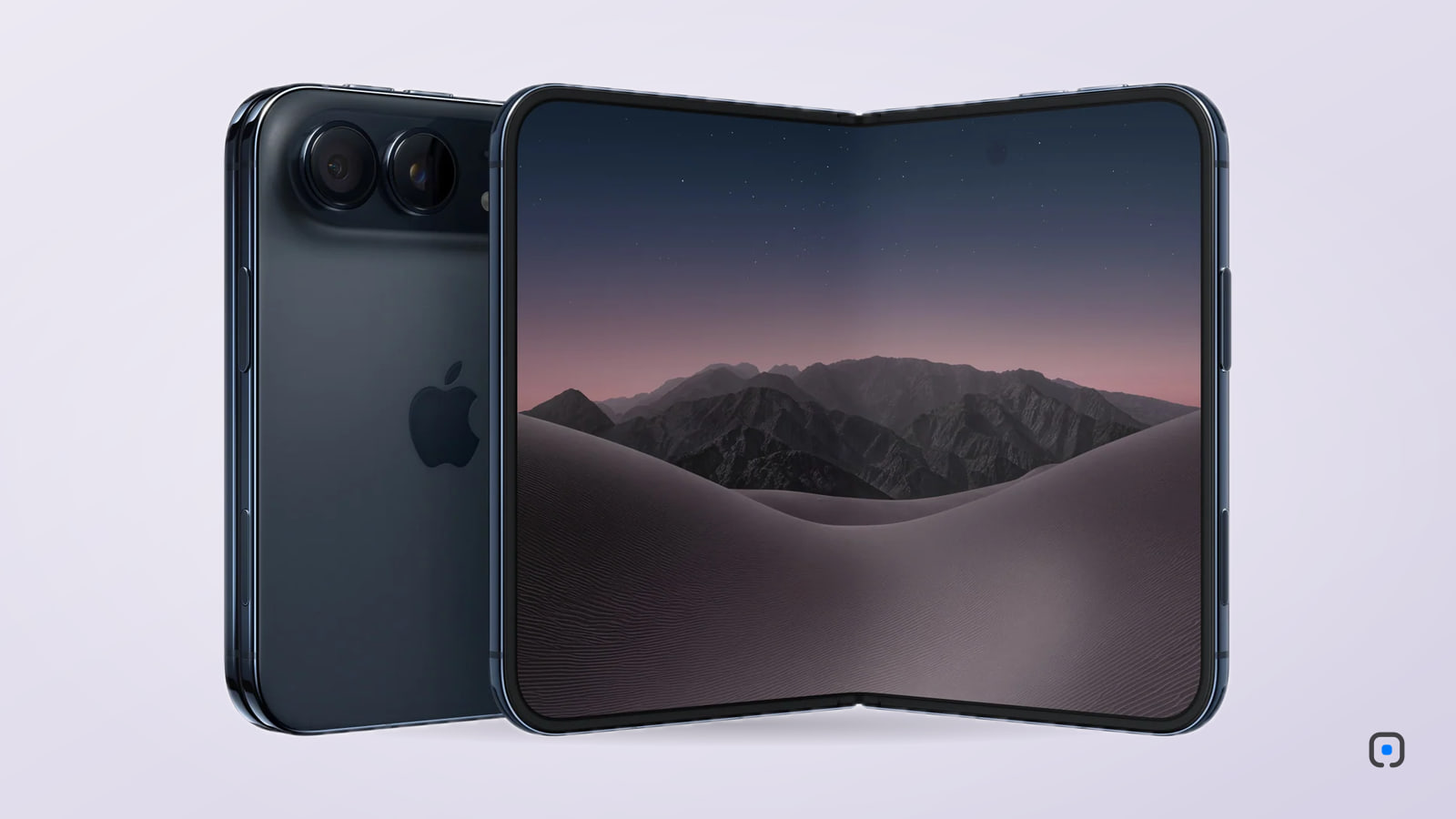
Take a sheet of A4 paper from the printer tray and lay it flat on the desk. Fold it in half, short edge to short edge, and press the crease with your thumb. What you are holding is A5. It is smaller, but it is the same shape. Fold it again and you have A6, still the same shape.
That small piece of desk magic sits near the heart of the iPhone Duo, Apple's first folding iPhone. It took the company a long time to get here, and the wait explains a great deal about the phone.
Why Apple let others go first
Samsung sold its first folding phone in 2019. Huawei, Google, Xiaomi and others followed, and for years the question in phone shops from Osu to Kumasi was the same: when is Apple doing one?
The honest answer is that Apple had been thinking about it for far longer than it had been building it. The company filed a patent for flexible electronic devices in 2011, and one of the names on it was John Ternus, who has since become Apple's chief executive. More filings on flexible displays followed through the decade. According to patent analysts at Patsnap, work aimed at an actual folding device picked up from around 2019. Reports later said that by 2020 Apple's leadership was convinced it needed to be in this category. That puts the serious work at roughly seven years before the Duo was announced on 9 September 2026.
The French creator Léo Duff built a video around exactly that question: why Apple waited seven years. One point he makes is worth repeating. After all this time, folding phones remain a small slice of the phone market. Apple was not late to a crowded party. It arrived at a quiet one and decided the category still had not been done properly.
The first folding phones had three problems. The crease was visible and got worse. The hinges felt loose or stiff. And the software treated a big folding screen as a stretched phone. Apple's argument for waiting is that it wanted all three sorted before it put its name on the thing.
The shape of a sheet of paper
A4 paper has a clever property. Its sides are in the ratio 1 to the square root of 2, about 1 to 1.414. That is the only rectangle which, cut or folded in half across its long side, gives you two smaller rectangles of exactly the same shape. It is why a photocopier can shrink A4 onto A5 without leaving blank strips.
Now look at the iPhone Duo's numbers. The inner screen is 7.6 inches across the diagonal, at 1878 by 2670 pixels. Divide one by the other and you get about 1.42. The square root of 2 is 1.414. That is very close to paper.
It gets better when you fold it. Held open, the inner screen is 2670 pixels wide. Halve that and each side of the fold is 1335 by 1878 pixels, a ratio of about 1.41. So each half of the open screen is, near enough, a smaller sheet of the same paper. Divide 7.6 inches by the square root of 2 and you get 5.37. The outer screen is 5.4 inches.
Here is where we should be careful, because the story is lovely and the numbers are slightly less tidy. The outer screen is its own panel, not literally half of the inner one. It runs at 1398 by 2034 pixels, a ratio of about 1.45, so it is a touch taller and narrower than a true paper shape. It is also sharper, at 460 pixels per inch against 430 inside. Work out the physical area from the diagonals and ratios, and the outer screen comes to almost exactly half the inner one.
In practice this matters more than it sounds. Close the phone and you have a normal-feeling iPhone, not the tall, narrow remote control some folding phones become. Open it and you have something close to a small book page. An app does not have to reinvent itself when you go from one to the other.
The crease and the hinge
Every folding screen has a crease. The question is how much you notice it.
Apple's approach is partly engineering and partly surface. The inner display has a matte nano-texture finish, which cuts reflections and, more to the point, hides small changes in the surface where the screen bends. Underneath, Apple says the display layers are bonded with adhesives that let them slide against each other like the pages of a book, easing the stress at the fold, with a titanium panel and support ribs holding the centre flat when open.
Tom Marieb, Apple's vice president of hardware engineering, was unusually direct about it in an interview reported by MacRumors. He said the matte finish is more forgiving as the fold changes over time, and invited buyers to "hold us accountable" on the crease. Early hands-on reports say it is still there in the right light, but faint.
The hinge is built from more than 100 components, with a 3D-printed hinge cover and a magnet array to keep the phone shut. Marieb said the team worked hardest on how it feels to open, comparing the resistance to the door of an expensive car. The body is titanium.
The software
This is where Arun Maini, known as MrWhosetheboss, and several other early reviewers have focused their attention: the hardware is strong, but the difference is in how iOS uses the space. Open the Duo and you can run two apps side by side, something that until now belonged to the iPad. You can even run two windows of the same app, say two Safari pages, which is useful for comparing things. The Dock and controls move to the side when open, to leave more height for what you are reading.
Inside is the A20 Pro chip. Apple quotes up to 24 hours of mixed use across both screens, and a 50 percent charge in about 20 minutes with a suitable wired charger.
Who it is for, and who should wait
The Duo is for people who already carry a phone and a tablet and would like to carry one thing. If you read long documents, review spreadsheets in traffic, edit photos, or watch films on flights, the open screen changes how you use a phone.
Two things to know before you order. First, the iPhone Duo is eSIM-only everywhere in the world. It does not take a physical SIM card at all, so check that your network can give you an eSIM before you buy. Second, this is a first-generation product. Apple has done the waiting for you on the crease and hinge, but no one has lived with one for a year yet. If your current phone is fine and you like to buy proven things, there is no shame in waiting for the second version.
Pre-orders open on 16 October, and Apple releases the phone on 23 October. At iVillage the Duo is an order request: you place the order, nothing is charged at checkout, and we confirm availability before sending you a secure payment link. It is brand-new, sealed and carries Apple's own warranty.
Fold a sheet of A4 on your desk tonight and look at the two halves. That is the idea. You can order the iPhone Duo from us when you are ready.
Comments
No comments yet — be the first.
Sign in to join the conversation. You can comment under your name or anonymously.