Buying guides · 22 September 2026
Which Apple Watch should you buy in 2026?
Series 12 and Ultra 4 are here, SE 3 stays, and last year's models are still worth a look. A plain guide to choosing, with Ghana's sun and heat in mind.
By iVillage Africa
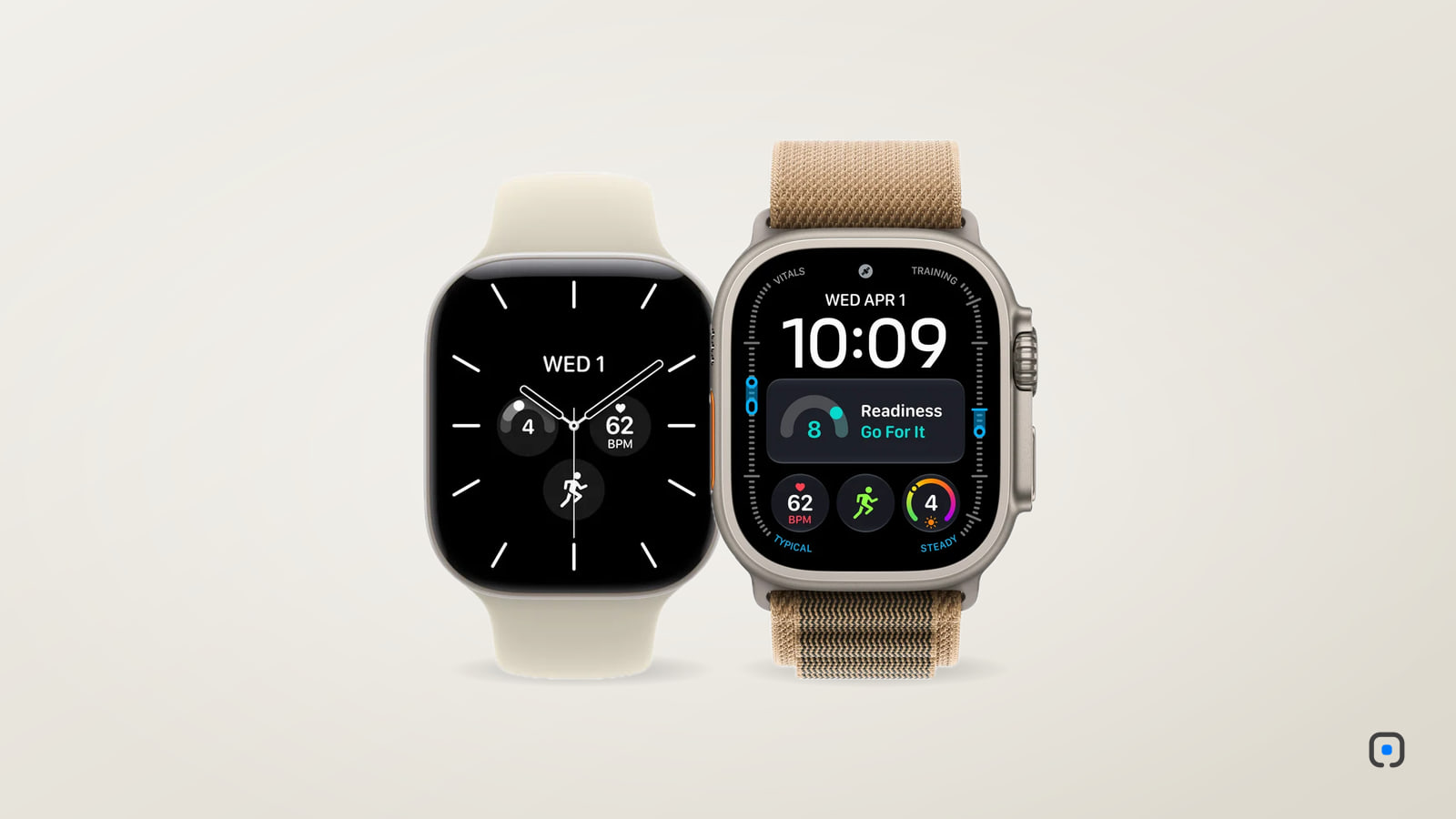
Stand at a trotro stop on the Spintex Road at one in the afternoon and try to read a watch face. That is the real test of a smartwatch in Ghana, and it is where the differences between Apple's models stop being numbers on a spec sheet.
On 9 September Apple announced the Apple Watch Series 12 and Apple Watch Ultra 4, and both went on sale on 18 September. Apple Watch SE 3 stays in the range. Apple itself has stopped selling last year's Series 11 and Ultra 3, but we still have them, and for some people they are the smarter buy.
Here is how we would choose.
Apple Watch Series 12: the one most people should wear
Series 12 runs Apple's new S11 chip, and the main change is inside: a new health sensing system that checks your heart rate far more often than before. Around it sits a new Readiness app, a Vitals app that tracks heart rate, breathing rate, wrist temperature, sleep and heart rate variability overnight, plus ECG, blood oxygen, sleep apnoea notifications and hypertension notifications.
Battery life is rated at up to 24 hours of normal use, or 38 hours in Low Power Mode. It fast-charges to 80 per cent in about 30 minutes, and 15 minutes on the charger gives up to 12 hours of normal use, which matters when the power goes off overnight and you have a short window in the morning.
The display peaks at 2000 nits. That is readable in direct sun.
Series 12 is also the first Apple Watch available in ceramic. At iVillage we stock the aluminium GPS models in 42mm and 46mm. The ceramic and titanium versions only come with cellular, and the GPS model is the sensible choice when your iPhone is in your pocket anyway. Apple Watch Series 12
Apple Watch Ultra 4: for long days outside
The Ultra is a different object. It is a 49mm titanium case with a flat sapphire crystal, a display that reaches 3000 nits, and a programmable Action button. It is heavier, around 63 grams, and it looks like a tool.
The reason to buy one in Ghana is battery life and brightness. Ultra 4 is rated at up to 50 hours of normal use and up to 84 hours in Low Power Mode, with workout modes that can track for up to 45 hours. A weekend trip to the Volta Region without the charger is realistic. It also has dual-frequency GPS for more accurate routes, a depth gauge and a water temperature sensor for open water.
It shares the Series 12 health features and the S11 chip. Every Ultra has cellular built in; whether you use it depends on your network supporting Apple Watch plans, so check with your provider before you count on it. Apple Watch Ultra 4
Apple Watch SE 3: the sensible first watch
SE 3 covers what most people actually use: notifications, workouts, sleep tracking with a sleep score, heart rate alerts, fall detection and crash detection. It now has an always-on display, which was the main reason to skip earlier SE models, and Apple rates its front glass for four times the crack resistance.
What it lacks is the advanced health sensing: no ECG, no blood oxygen, no hypertension notifications. The display peaks at 1000 nits, half the Series, so it is harder to read in full sun. Battery is rated at up to 18 hours, or 32 in Low Power Mode, which means charging it every night.
For a teenager, a first smartwatch, or someone who mainly wants fitness and notifications, it is the right place to start. We sell the aluminium GPS models in 40mm and 44mm. Apple Watch SE 3
Last year's models: Series 11 and Ultra 3
Apple no longer sells these, but they remain supported by the current watchOS, and they are still very good watches.
- Series 11 has the same 2000-nit display, the same 24-hour battery rating and ECG, blood oxygen, sleep apnoea and hypertension notifications. What it does not have is the S11 chip, the new health sensing system and the Readiness and Vitals features built around it. Apple Watch Series 11
- Ultra 3 has the 3000-nit titanium design and up to 42 hours of normal use, 72 in Low Power Mode. For many outdoor people, that is already more than enough. Apple Watch Ultra 3
If the newest health features are not why you want a watch, last year's model is a reasonable choice.
Heat, sweat and straps
A few practical notes for life here:
- Brightness matters more than you think. If you are often outdoors in the middle of the day, the difference between 1000, 2000 and 3000 nits is the difference between glancing and squinting.
- Sweat is fine. Every model here is water resistant, and you can rinse it under a tap after a workout. Do it; salt dries on the sensors and the strap.
- Pick the strap for the climate. Sport bands and fabric loops breathe better in humidity than leather. Take the watch off for a few minutes after a long hot day so your skin can dry.
- Charge in the morning if power is unreliable. All three current models fast-charge, and a short top-up after the lights come back usually covers the day.
The short version
- Most people: Series 12, 42mm or 46mm.
- Outdoor, travel or long days away from a charger: Ultra 4, or Ultra 3 if the new health features do not matter.
- First watch, teenagers, fitness basics: SE 3.
Every Apple Watch needs an iPhone to set up, so make sure yours is on a recent version of iOS before the watch arrives. Our watches are brand-new, sealed and delivered free anywhere in Greater Accra.
Comments
No comments yet — be the first.
Sign in to join the conversation. You can comment under your name or anonymously.